

What Are the Key Chemistry Milestones in Early Drug Discovery?
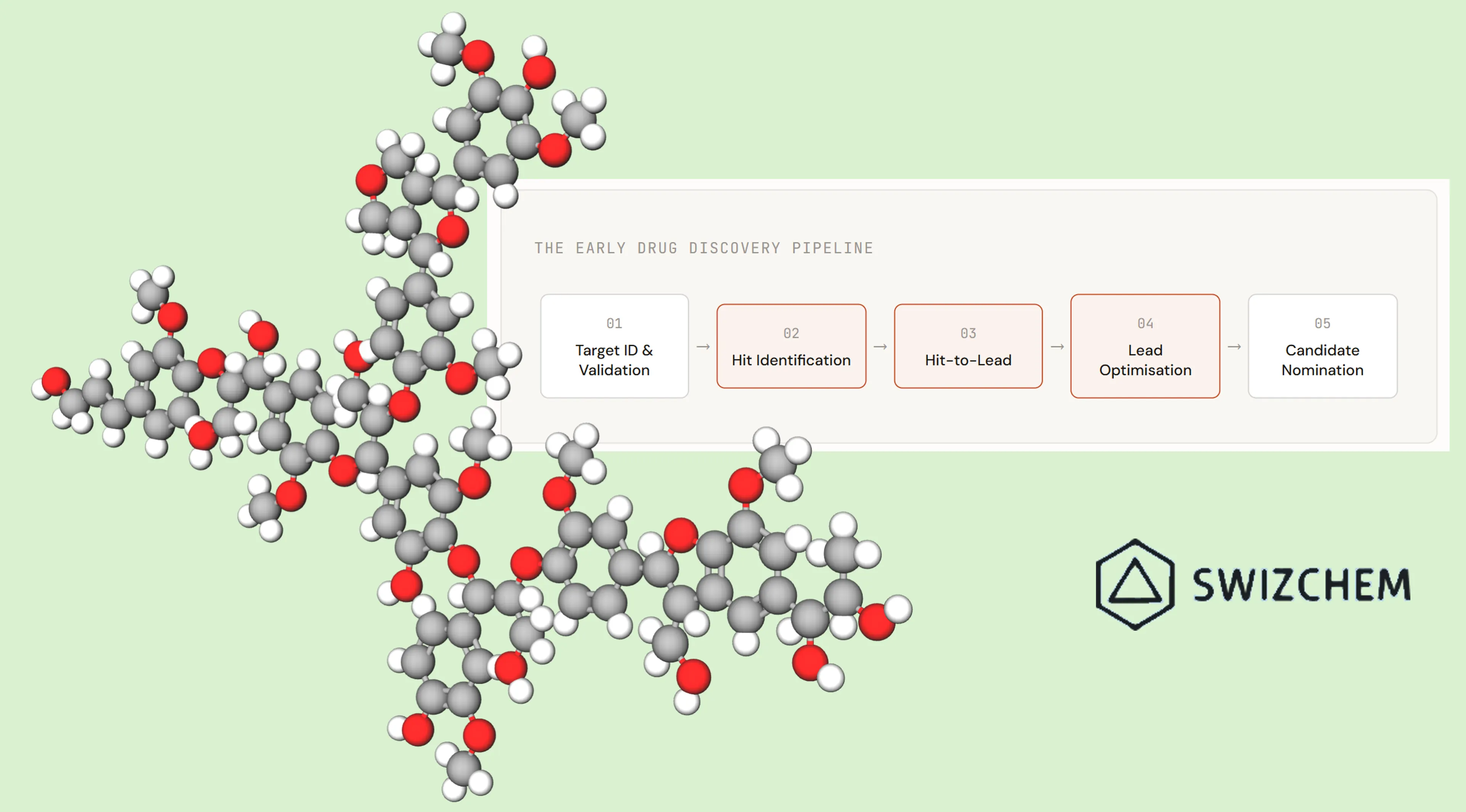
Drug discovery is neither a straight line nor a clean experiment. It is a layered process where chemistry, biology, and data collide and where decisions made in the first few months can determine whether a program succeeds or fails years later. Understanding the chemistry milestones within early discovery is not a matter of academic interest; it is directly relevant to how time and resources are spent, and to how often programs arrive at a viable drug candidate. Hit Identification- Finding a Chemical Starting Point Before any optimisation can begin, chemists need something to work with: a molecule that demonstrably interacts with a biological target of interest. This is hit identification, and the methodology used here has a significant downstream effect on the quality of the chemical series that follows. High-throughput screening (HTS) remains the most widely used approach, enabling the rapid testing of compound libraries that may contain hundreds of thousands of distinct structures against a single assay. The appeal is straightforward coverage. The challenge is equally plain: large libraries produce many false positives, and activity in a biochemical assay does not guarantee a tractable molecule. Virtual screening has become an essential complement to HTS, using computational docking, pharmacophore models, and machine learning classifiers to filter libraries before physical testing. When a well-resolved crystal structure of the target protein is available, structure-based virtual screening can dramatically improve the hit rate. Natural products also continue to contribute meaningfully, particularly for complex binding sites where the structural elaboration of evolved secondary metabolites is difficult to reproduce with synthetic compound collections. Hit-to-Lead: The First Round of Structure-Activity Relationships Once a hit series is confirmed as genuine and chemically tractable, the program enters the hit-to-lead (H2L) phase. This is where medicinal chemistry truly begins: the systematic exploration of structure-activity relationships (SAR) to understand which parts of the molecule drive potency, which can be modified, and which features might become liabilities. At this stage, analogues are synthesised around the initial hit scaffold. Each new compound is designed to answer a specific question: What happens if we replace this ring? Does removing this functional group affect selectivity? Is there a metabolic soft spot we should address early? The answers accumulate into a chemical map of the binding site. Early absorption and metabolic stability data should ideally be introduced here rather than deferred. Poor aqueous solubility and rapid hepatic clearance are among the most common reasons for failure further downstream, and addressing them before the lead stage avoids costly iteration later. Lead Optimisation- Balancing Potency, Safety, and Drug-Likeness Lead optimisation is the most resource-intensive phase of early discovery, and it is where the majority of chemical ingenuity is concentrated. A lead compound may show excellent potency against the primary target, but if it is rapidly metabolised, poorly absorbed, or toxic at margins close to its efficacious dose, it cannot progress. The task is to improve all of these properties simultaneously often in the face of direct trade-offs. Lipinski's Rule of Five and its extensions offer a useful empirical framework for oral bioavailability, though they should be treated as guiding heuristics rather than hard constraints. Many successful drugs deviate from one or more of these parameters, particularly as the field has expanded into macrocycles and other beyond-rule-of-five chemical space. Peptidomimetics and Macrocycles: Targeting the Previously Unreachable Classical small molecule drug discovery has always been better suited to some target classes than others. Enzymes with deep, well-defined active sites, ion channels, and GPCRs respond well to small molecule intervention. But a large and biologically important class of targets protein–protein interactions (PPIs), intrinsically disordered proteins, and large surface-area binding events presents features that small molecules struggle to address: flat extended binding interfaces, and recognition events that depend on mimicking the three-dimensional presentation of a peptide or protein loop. Peptidomimetics address this by retaining the pharmacophoric features of a bioactive peptide while replacing the peptide backbone with more metabolically stable and cell-permeable alternatives. N-methylation of amide bonds, for example, reduces the hydrogen bond donor count (improving membrane permeability) and confers local rigidity that can pre-organise the pharmacophore into its bioactive conformation. Macrocycles take this concept further. By forming a covalent ring that constrains the three-dimensional shape of the molecule, macrocyclisation reduces the entropy penalty upon binding, enabling productive engagement with extended binding surfaces that would otherwise require a flexible and entropically costly linear molecule. Approved drugs such as cyclosporin A and venetoclax illustrate the clinical potential of this approach. Fragment-Based Drug Discovery- Small Molecules, High Efficiency Fragment-based drug discovery (FBDD) inverts the conventional screening logic. Rather than screening drug-like molecules (MW ~400–500 Da) at concentrations where weak binding is detectable, FBDD begins with very small molecules fragments, typically 100–300 Da that bind to the target with low affinity but high efficiency. Because fragments are small, even weak binding (Kd in the mM range) can be physically meaningful: there is simply not enough molecular complexity to achieve binding through artefactual mechanisms. Detection methods are critical to this approach, and biophysical techniques dominate: surface plasmon resonance (SPR) quantifies binding kinetics in solution; protein-observed NMR can identify binding sites and conformational changes; X-ray crystallography delivers the most directly actionable data by revealing the precise binding mode of even a weakly bound fragment. Once fragment hits are identified, growth or linking strategies are applied: the fragment is elaborated by adding chemical groups that engage additional regions of the binding site, guided by structural data. The result, in successful programs, is a final compound with excellent binding efficiency because potency was built additively into a well-fitting scaffold rather than accumulated through indiscriminate molecular mass. How Swizchem supports your discovery programme Every milestone described in this article ultimately depends on one thing: having the right compound in hand. At Swizchem, we specialise in the custom synthesis of organic molecules that drug discovery programmes actually need novel analogues for SAR exploration, reference standards, isotopically labelled compounds for metabolic studies, and complex synthetic intermediates that challenge conventional chemistry. Whether you need a focused series of ten compounds to answer a specific SAR question or a broader library of scaffolds to kickstart a new hit-to-lead campaign, our synthetic expertise sits at the heart of what we do. Explore our organic synthesis services →https://www.swizchem.com/ This article reflects the scientific principles underlying contemporary early drug discovery practice. Lipinski, C. A. et al. (1997). Experimental and computational approaches to estimate solubility and permeability in drug discovery. Advanced Drug Delivery Reviews, 23(1–3), 3–25. Erlanson, D. A. et al. (2016). Twenty years on: the impact of fragments on drug discovery. Nature Reviews Drug Discovery, 15(9), 605–619. Meanwell, N. A. (2011). Synopsis of some recent tactical application of bioisosteres in drug design. Journal of Medicinal Chemistry, 54(8), 2529–2591. Schneider, G. (2018). Automating drug discovery. Nature Reviews Drug Discovery, 17(2), 97–113.
Key Takeaways
- Hit identification separates genuine chemical starting points from assay artefacts
- High-throughput screening covers breadth but requires rigorous triage to remove false positives
- Hit-to-lead uses SAR to build a chemical map of the binding site
- Early solubility and metabolic stability data prevents costly failures downstream
- Fragment-based discovery builds potency efficiently from small, high-quality binders
The history of drug discovery is a history of better chemistry. From hit identification through fragment-based design and macrocycle synthesis, each milestone represents a shift in how scientists approach the problem from empirical trial and error toward hypothesis-driven, structurally informed molecular design. Every one of these milestones ultimately depends on having the right compound in hand. At Swizchem, we provide the custom organic synthesis that makes discovery chemistry possible novel analogues, reference standards, isotopically labelled compounds, and complex intermediates, built to the exacting requirements of your programme.