

ADC Linkers and Their Role in Precision Oncology
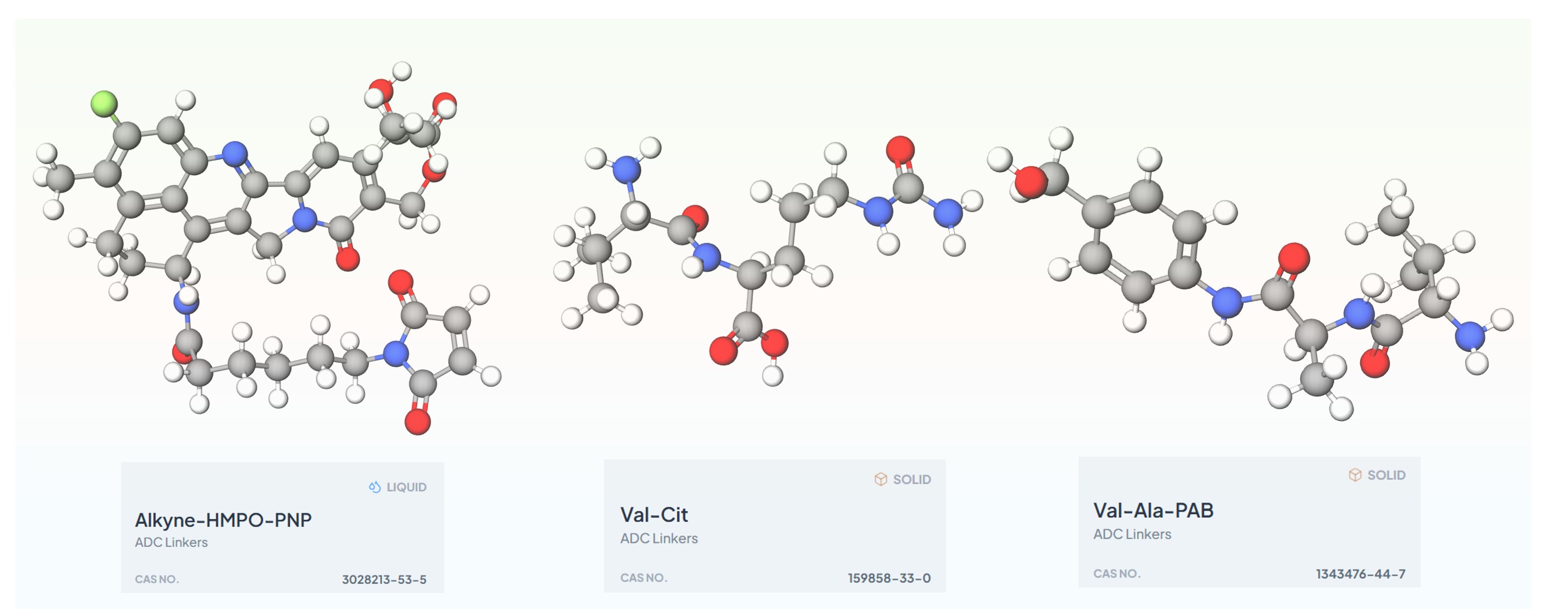
Antibody–drug conjugates (ADCs) represent one of the most important advances in modern oncology. By combining the specificity of monoclonal antibodies with the potency of cytotoxic small molecules, ADCs offer a way to deliver highly active drugs directly to cancer cells while minimizing systemic toxicity. This concept, often described as targeted chemotherapy, has significantly altered expectations in drug development. However, the effectiveness of an ADC does not rely solely on the antibody or the payload. At the molecular level, there is a third component that plays a decisive role in determining overall performance: the linker. The linker connects the antibody to the payload, but its function extends far beyond that of a simple bridge. It governs how the drug behaves in circulation, how stable the conjugate remains, and most importantly, when and where the cytotoxic payload is released. In this sense, the linker acts as a molecular control system that directly influences both efficacy and safety. A well-designed linker must meet two seemingly contradictory requirements. On one hand, it must remain stable in the bloodstream, preventing premature release of the payload that could lead to off-target toxicity. On the other hand, it must efficiently release the drug once the ADC reaches the tumor environment. Achieving this balance is one of the central challenges in ADC design and continues to drive innovation in linker chemistry. Over the past decade, significant progress has been made in developing linker systems that respond to specific biological triggers. These include changes in pH, the presence of particular enzymes, and the intracellular redox environment. Such cleavable linkers are designed to remain intact during circulation but undergo controlled cleavage once they encounter tumor-specific conditions. This approach allows for precise intracellular drug release, improving therapeutic outcomes while reducing damage to healthy tissues. At the same time, non-cleavable linker systems have also demonstrated value in certain applications, offering enhanced stability and controlled degradation pathways. The choice between cleavable and non-cleavable strategies depends on multiple factors, including tumor biology, payload properties, and the intended mechanism of action. In both cases, linker design remains a critical factor that can significantly influence the success of an ADC. As the field continues to evolve, the demand for reliable, high-quality linker molecules has increased. Researchers developing ADCs require access to well-characterized intermediates and building blocks that can support a wide range of conjugation strategies. Delays or inconsistencies in sourcing these materials can slow down experimental workflows and limit progress in early-stage development. Recognizing this need, Swizchem has introduced a dedicated ADC Linker catalog, now available in stock. This collection is designed to support researchers working across different stages of ADC development, from initial conjugation studies to more advanced optimization work. Each compound is prepared with a focus on high purity and reproducibility, ensuring compatibility with precision-driven research environments. The availability of ready-to-use linker molecules allows scientists to move more efficiently from concept to experimentation. Whether the goal is to explore new conjugation strategies, evaluate different release mechanisms, or optimize existing constructs, having access to reliable chemical inputs can make a measurable difference in development timelines. Looking ahead, ADCs are expected to play an increasingly important role not only in oncology but also in broader areas of targeted therapy. Advances in antibody engineering, payload design, and conjugation technology are expanding the possibilities of this platform. Within this evolving landscape, linker chemistry will remain a key area of focus, shaping how effectively these therapies can be translated from laboratory research to clinical application. Swizchem’s ADC linker portfolio is positioned to support this progress by providing researchers with dependable, high-quality materials that enable innovation at the molecular level. By focusing on precision, availability, and consistency, we aim to contribute to the continued advancement of targeted drug delivery.
Key Takeaways
- ADC linkers control drug release and stability
- Balance between stability and release is critical
- Cleavable linkers dominate modern ADC design
- Linker chemistry directly impacts therapeutic safety
- Swizchem now offers ADC linkers in stock for research use
The success of antibody–drug conjugates depends on careful control of molecular design, and linker chemistry plays a central role in this process. By determining both stability and release behavior, linkers directly influence therapeutic efficiency and safety. With increasing complexity in ADC development, access to reliable and high-quality linker building blocks becomes essential. Swizchem’s newly available ADC linker catalog is designed to support this need, enabling researchers to advance targeted drug delivery with greater precision and confidence.